Abian
Abian blue salt
Where It Comes From (Origin)
There is only one place on Earth where salt grows in shades of sapphire, and that is the ancient highlands of Semnan Province in northern Iran. Tucked into the rugged landscape near the town of Garmsar, miners still pull this extraordinary mineral from the same underground veins that have rested there for more than one hundred million years.
The story begins in the Precambrian era, when large ancient oceans slowly evaporated, leaving behind massive salt beds buried deep beneath what would later become the Iranian plateau. That salt was transformed over many centuries, not just buried. These are crystals of potassium chloride, so rare that they are called sylvinite, threaded through the halite rock like veins of frozen blue lightning, pushed by high geological pressure and constant temperature variations deep in the ground. This natural sylvinite, found in almost nowhere else in such concentration, is what gives Persian Blue Salt its distinctive indigo and azure shine. These crystals contain no artificial colouring or industrial treatments , their distinctive blue shade is entirely natural, revealed through rare mineral formations.
Persian Blue Salt is not like sea salt that is harvested by evaporation, but rather a unique rock salt discovered in hard underground deposits. Miners must first navigate through large chambers of white salt before reaching the valuable blue veins, making its extraction labor-intensive and challenging. This complexity adds to a limited annual supply, making Persian Blue Salt one of the world’s rarest edible salts.
For consultation and further information, please get in touch with our team members.
Research
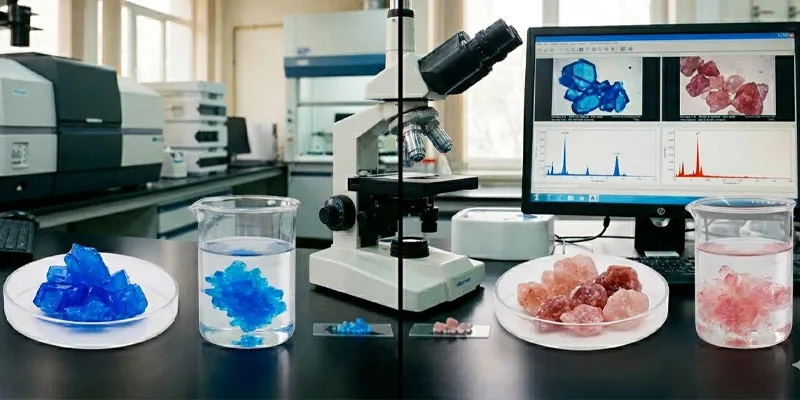
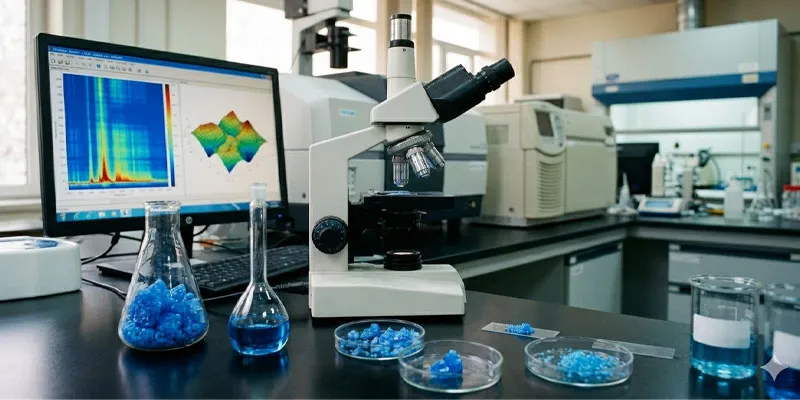
A 2023 research compared Persian Blue Salt to nine other gourmet salts, emphasising its higher mineral content. According to the data, Persian Blue Salt has more calcium (6,252 mg/kg) than Himalayan Pink Salt, more than double it. Furthermore, its iron level is around 21.7 mg/kg, which is roughly eight times greater than that of Himalayan salt. Zinc levels reached 1,334 mg/kg, more than five times greater than Himalayan salt, while potassium and magnesium levels increased significantly as compared to other salts. The unique mineral composition of Persian Blue Salt contributes to its rich flavour profile, with a mild aftertaste that sets it apart from normal sodium chloride.
Health & Wellness
• High potassium, supporting electrolyte balance, muscle contraction, and nerve signaling.
• High magnesium, aiding in muscle relaxation and cardiovascular function.
• High calcium, beneficial for bone integrity.
• Low sodium chloride, allowing for more flavor and mineral benefits in smaller quantities.
Compare to Himalayan
Persian Blue Salt is frequently compared to the more commonly known Himalayan salt, and its differences are deeper than colour. Himalayan salt’s renowned pink colouration is derived from iron oxide, not potassium chloride, which immediately indicates a different mineral composition. Additionally, it contains a significantly higher concentration of calcium and iron, while simultaneously having a lower overall sodium content. Persian Blue Salt is the superior choice due to its rarity, mineral density, and visual impact.